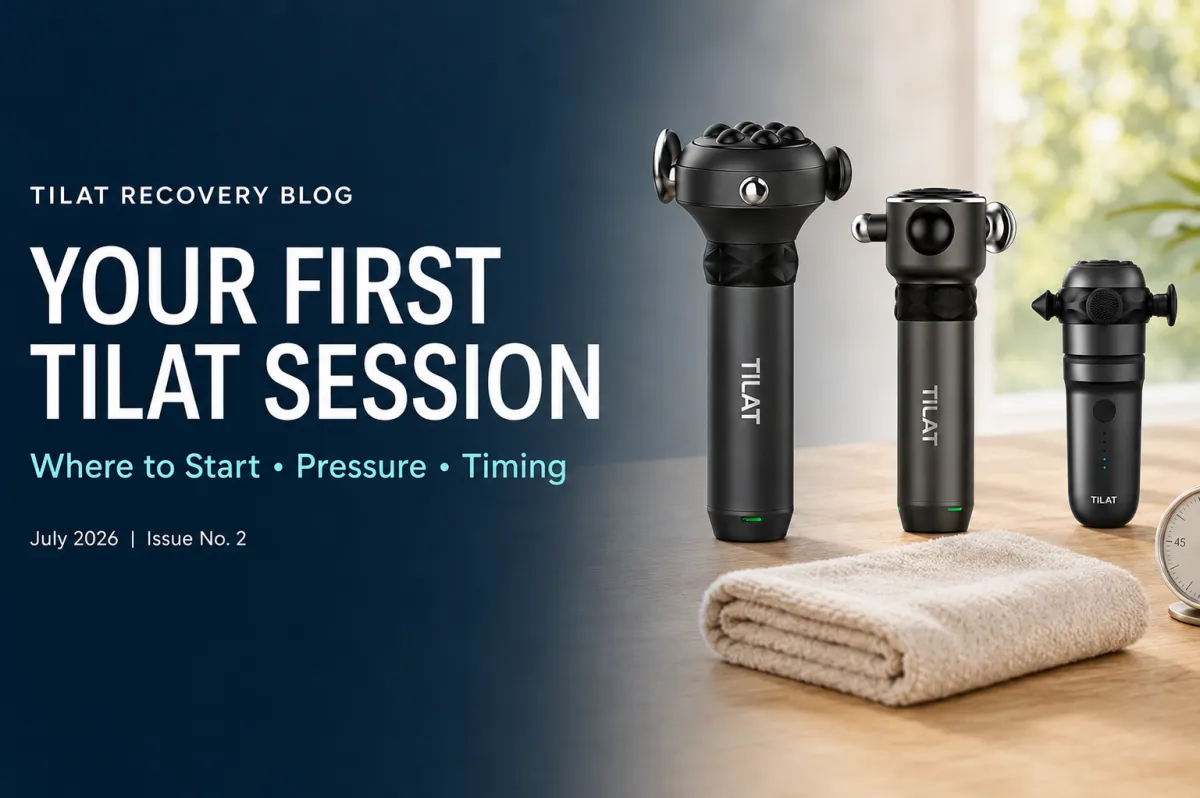
Your First TILAT Session: Pressure, Timing & Where to Start
Your first TILAT session does not need to be long or intense. In fact, the best first experience is usually simple, gentle, and focused.
The goal is not to accomplish everything in one session. The goal is to become familiar with the device, notice how your body responds, and begin developing a comfortable approach you can build upon.
Three questions commonly arise:
Where should I begin?
How much pressure should I apply?
How long should I use the device?
Let’s take these questions one at a time.
The Goal of Your First Session
Think of your first session as an introduction—not a treatment you need to push through.
You are learning:
How the vibration feels
How the device sits in your hand
Which setting feels comfortable
How your body responds during and after use
Whether you have a tendency to press harder than necessary
More pressure and more time do not automatically produce a better result. Your first session should help you develop awareness, comfort, and control.
Before You Turn on Your Device
Take a few moments to prepare:
Review the instructions supplied with your specific TILAT model.
Make sure the device has enough charge for your session.
Watch the TILAT Safety Video before your first use.
Select a comfortable place where your body can remain relaxed.
Choose one easy-to-reach muscle area rather than trying to work on several areas.
For your first session, avoid starting with a sensitive or complicated area, such as the face, scalp, neck, spine, or any area directly over a joint. Those areas are better explored after reviewing the appropriate TILAT demonstration.
If you have an implanted medical device, a recent surgery or injury, unexplained swelling, impaired sensation, a blood-clotting concern, or another significant medical condition, speak with a qualified healthcare professional before using the device.
Where Should You Start?
Choose a broad, comfortable muscle area that is easy for you to reach.
Good introductory areas may include:
The front or outer portion of the thigh
The fleshy portion of the calf
The forearm muscles
The upper arm
Avoid lingering directly over prominent bones, and do not use the device on broken or irritated skin, bruising, or an acutely painful or swollen area. Because TILAT uses vibration rather than forceful percussion, it can be applied gently over many joints. Begin at the lowest speed with light pressure, then gradually increase the intensity only if the area remains comfortable.
Starting with one area makes it easier to understand what you are feeling and how your body responds afterward.

How Much Pressure Should You Use?
Begin with light contact.
You need only enough pressure to keep the selected attachment comfortably connected to the body's surface. You should not feel as though you are forcing the device deeply into the tissue.
Let the vibration do the work. Your hand is there primarily to guide the device.
You may be using too much pressure if you notice yourself:
Tightening other parts of your body
Holding your breath
Gripping the device excessively
Bracing against the sensation
Experiencing sharpness, pain, or irritation
Feeling that the device is harsh rather than comfortable
Try softening your grip, reducing the pressure, or selecting a lower setting.
A useful principle is:
If your body has to defend itself against the experience, reduce the intensity.
Keep the Device Moving
For your first session, slowly guide the device over the selected muscle area rather than holding it in one place for an extended period.
Use smooth, unhurried passes. There is no need to move rapidly or search aggressively for a painful spot.
If you find an area that feels especially tense, you may pause briefly, but continue paying attention to your breathing and overall comfort. Remaining on one exact spot longer is not necessarily more helpful.

How Long Should Your First Session Be?
There is no single duration that is right for every person. Your comfort, health history, sensitivity, selected area, device model, and settings all matter.
For a conservative first experience:
Begin with approximately 15 to 30 seconds of gentle, moving contact on one muscle area.
Turn the device away from the body and pause.
Notice how the area feels.
If everything feels comfortable, repeat one more brief pass.
Keep the entire first session to approximately three to five minutes.
This is a learning protocol, not a universal treatment prescription. Always follow the operating and safety instructions supplied with your particular TILAT device.
Your body may respond more clearly after you stop. Give yourself time to notice before deciding that you need more.
What Should You Notice?
During the session, ask yourself:
Can I breathe normally?
Does the sensation feel comfortable?
Can I keep the surrounding muscles relaxed?
Am I using more pressure than necessary?
Does the area feel the same, easier, or more guarded?
Afterward, move the nearby joint gently and compare how the area feels.
A comfortable session may leave the area feeling warmer, more relaxed, or easier to move. However, responses vary, and dramatic changes are not required for the session to be useful.
Stop using the device if you experience sharp pain, new numbness or tingling, dizziness, nausea, unusual skin irritation, increased swelling, or any other concerning reaction.
Change Only One Thing at a Time
As you become more familiar with the device, resist the temptation to increase everything at once.
You could gradually explore:
A slightly longer session
A different setting
A different attachment
A different muscle area
A small change in pressure
Change only one variable at a time. This makes it much easier to understand what your body responds to—and what may have been too much.
Your First Session Is a Conversation
A TILAT session should not become a contest to see how much intensity you can tolerate.
Approach the experience with curiosity. Begin gently, remain comfortable, and listen to the feedback your body provides.
The more attentively you use the device, the more confidently you can integrate it into a thoughtful recovery and wellness routine.
Continue Learning
Before your first session, watch the Welcome Video and Safety Video in the TILAT Learning Center. Then explore the Consumer Learning Library for area-specific demonstrations and additional guidance.
Disclaimer
This article is provided for general educational and wellness purposes only and is not medical advice, diagnosis, or treatment. Always follow the instructions and warnings supplied with your TILAT device. Consult a physician or other qualified healthcare professional before use if you have a medical condition, implanted medical device, recent injury or surgery, unexplained symptoms, or concerns about whether vibration therapy is appropriate for you. Individual responses may vary.


